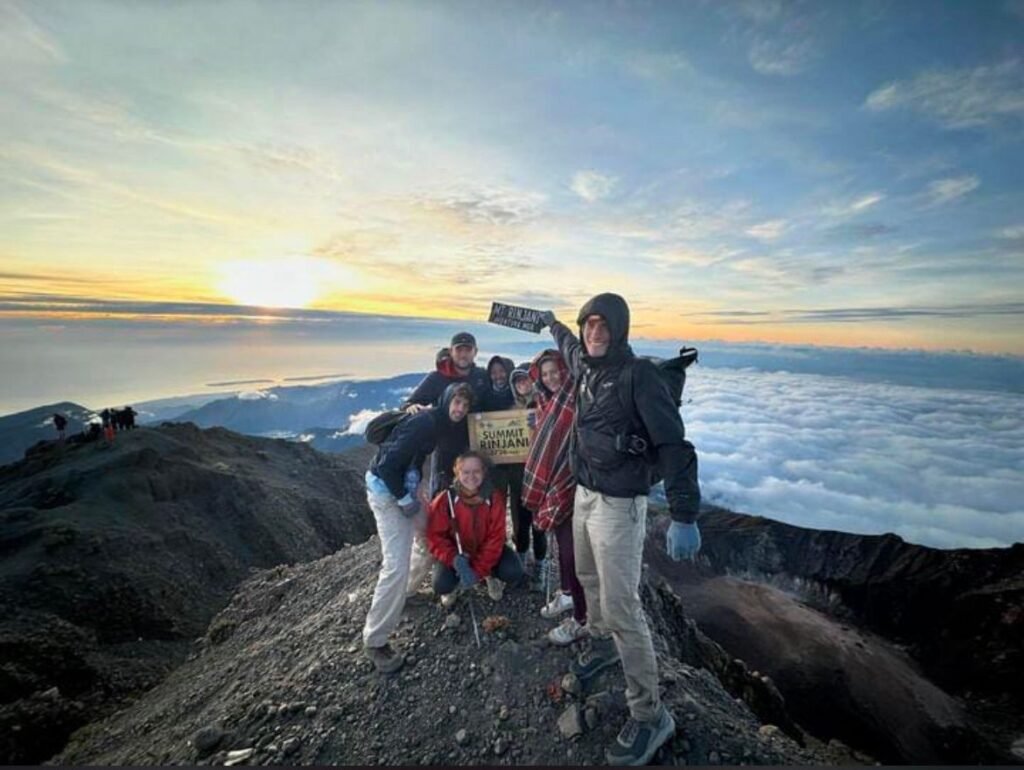
Before you lace up your shoes and chase the summit, here’s exactly what to expect before you go Mount Rinjani trekking. Mount Rinjani is not just a destination it’s a commitment.
Standing at 3,726 meters above sea level, Mount Rinjani is the second-highest volcano in Indonesia and one of the most challenging trekking experiences in Southeast Asia.
If you’re planning your first Mount Rinjani trekking, this guide is not here to scare you but to prepare you. Because the mountain doesn’t care how pretty your plan is. It only responds to readiness.
Understanding Mount Rinjani Trekking is Not a Casual Hike
Mount Rinjani trekking is not a beginner hike. This is a multi-day trek involving:
Steep ascents
Loose volcanic sand
Rapid weather changes
High altitude exposure
Even experienced hikers find Rinjani physically and mentally demanding. The views are stunning—but they’re earned.
Mount Rinjani Trekking Routes You Should Know
1. Sembalun Route
Most popular for summit attempts
Long, open savanna trails
Gradual ascent but very exposed to sun
This route is commonly used for Mount Rinjani trekking packages aiming for the summit.
2. Senaru Route
Lush forest scenery
Steeper and more humid
Often used as a descent route
Physical Preparation You Don’t Skip This Part
Before Mount Rinjani trekking, focus on:
Cardio (stairs, hiking, cycling)
Leg strength (squats, lunges)
Endurance training
Why? Because summit day often starts at midnight, and the final ascent is steep, sandy, and unforgiving.
Altitude and Weather Expect the Unexpected
Mount Rinjani trekking exposes you to:
Cold temperatures at night (can drop below 5°C)
Strong winds near the summit
Intense sun during the day
Altitude effects may include:
Shortness of breath
Headaches
Fatigue
Permits and Regulations You Must Know
Mount Rinjani is located inside Mount Rinjani National Park, and trekking is regulated.
Before trekking:
You must have a valid trekking permit
Daily quotas apply
Trekking is only allowed during open seasons
What Mount Rinjani Trekking Packages Usually Include
A standard Mount Rinjani trekking package often covers:
Licensed guide
Porter service
Meals during the trek
Peralatan berkemah
National park fees
Food, Water, and Facilities on the Mountain
Here’s the raw truth:
There are no shops on Mount Rinjani
Facilities are minimal
Everything must be carried
Mental Preparation: The Silent Challenge
Mount Rinjani trekking is as mental as it is physical.
You’ll face:
Long silent walks
Fatigue-induced doubt
Moments of wanting to quit
What You Should Pack Before Mount Rinjani Trekking
Essentials include:
Trekking shoes with good grip
Warm layers (thermal, jacket, gloves)
Rain jacket
Headlamp or flashlight
Personal medication
Sunscreen & sunglasses
Best Time to Go Mount Rinjani Trekking
The trekking season usually runs:
April to October (dry season)
Peak months:
June to August (best weather, busiest time)
Safety and Responsibility on the Mountain
Before trekking:
Follow your guide’s instructions
Do not rush summit attempts
Carry back all trash
Conclusion
Mount Rinjani trekking is not about conquering a peak.
It’s about meeting your limits and walking past them carefully. If you prepare your body, mind, and expectations, Rinjani will reward you with: Unforgettable views Deep silence
A sense of accomplishment that lingers long after the descent